Osha construction 1
soha 30 const 1
added by -
acfwb2
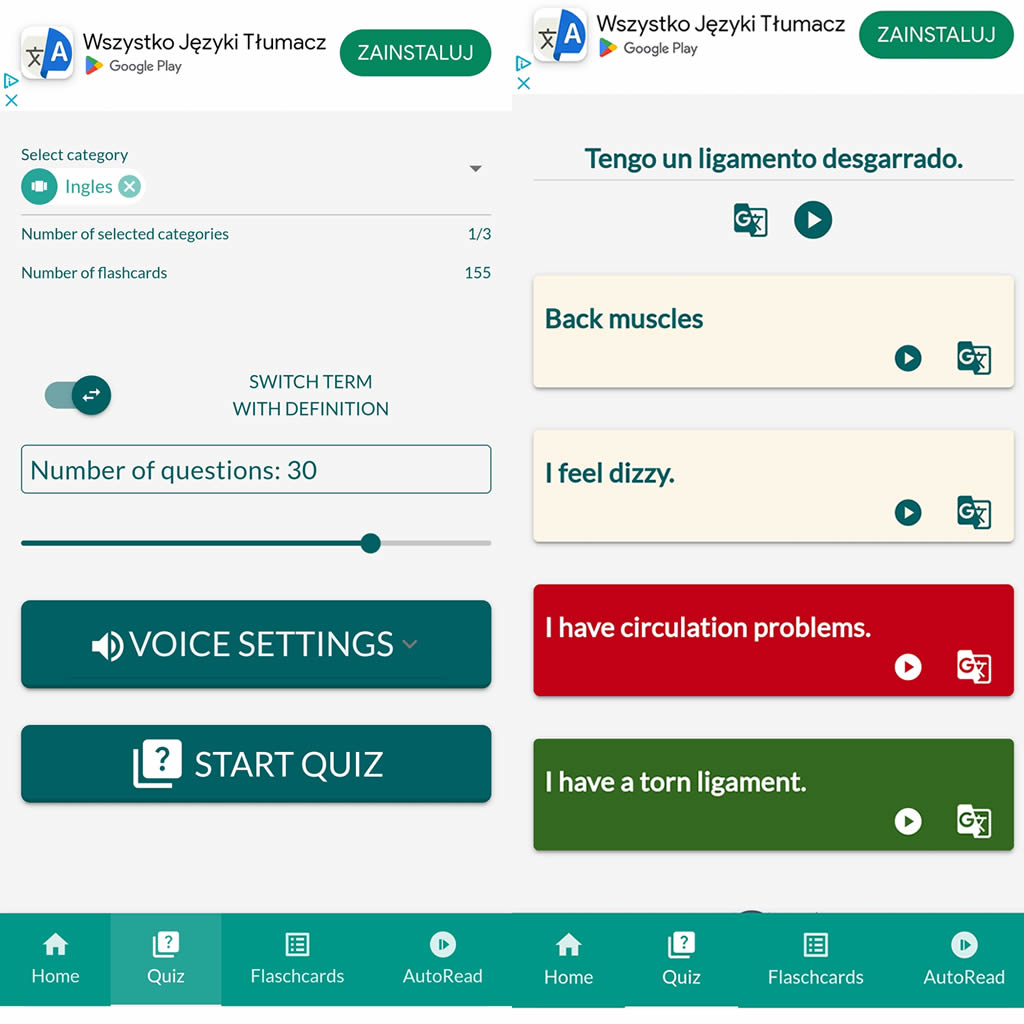
After importing flashcards into the Android NotifyWord app, you can listen to them without touching your phone, take quizzes, and mark the ones you've already learned - study actively or passively, whichever way you prefer.
📲
👉

🤖📚📖❓🎧🚴 Voice flashcards - an Android app for learning without touching the phone.
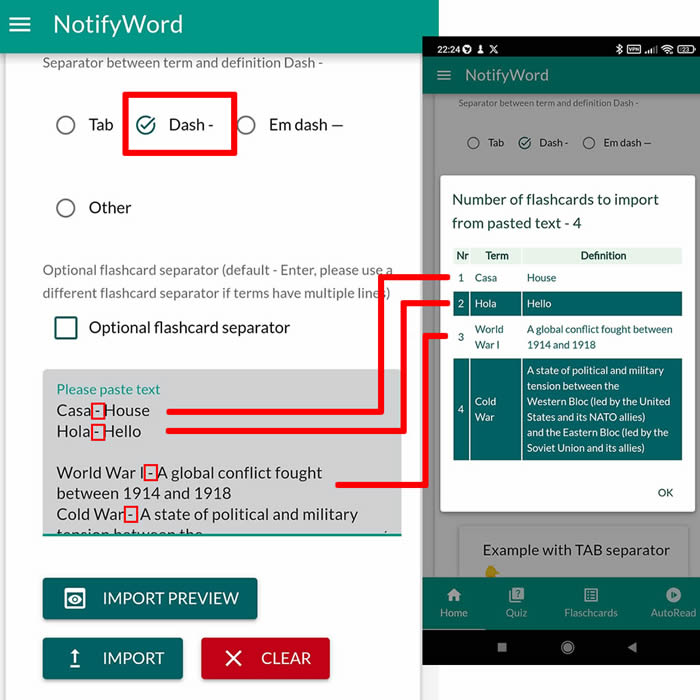
➕ On the website, you can create your own sets of flashcards, both public and private, import them from text, and then import them into the Android application.
| Term/Front | Definition/Back |
|---|---|
|
1 In Search of a Safe Place to Work Today, most Americans go to their jobs confident that they will not face unnecessary danger and will return home safely. However, America's workers have not always been able to trust that their safety and health were protected in the workplace. When fire swept through the Triangle Shirtwaist Factory in the spring of 1911, locked doors and missing fire escapes contributed to the deaths of 146 workers, most of them young women. This tragedy outraged the public, who called for reform. And in 1935, approximately 1,500 workers – largely African |
Americans who had come north to find work – were killed by exposure to silica dust while building a tunnel in Gauley Bridge, West Virginia. A Turning Point |
| 2 Even as recently as 1970, job | related accidents accounted for more than 14,000 worker |
| 3 deaths. Nearly 2.5 million workers were disabled. Ten times as many person | days were lost |
| 4 from job |
related disabilities as from strikes, and estimated new cases of occupational diseases totaled 300,000. Employers were simply not accountable for the safety and health of their employees at work. And in terms of lost production and wages, medical expenses and disability compensation, the burden on the nation's commerce was staggering. The Birth of OSHA To address these serious problems, the Occupational Safety and Health Act of 1970 – "the Act" or "OSH Act" – was passed by a bipartisan Congress "…to assure so far as possible every working man and woman in the nation safe and healthful working conditions and to preserve our human resources." The following year, OSHA – the Occupational Safety and Health Administration – was established as a division of the United States Department of Labor. The purpose of this training is to tell you more about OSHA, so that you can understand its role, your employer's role and your own role in keeping your workplace safe. Learning Objectives After completing this training, you will be able to: • explain why OSHA is important to workers, • explain worker rights under OSHA, • discuss employer responsibilities under OSHA, • discuss the use of OSHA standards, • explain how OSHA inspections are conducted, and • use helpful worker safety and health resources. So let's get started! © UL LLC. All rights reserved. OSHA's Mission Now that you know a little bit about why OSHA was created, let's talk about OSHA's mission. The mission of OSHA is to save lives, prevent injuries and protect the health of America's workers. The OSH Act states that workers have the right to a safe workplace and that it is the employer's responsibility to provide safe and healthy workplaces. Some of the things OSHA does to carry out its mission are: developing job safety and health standards and enforcing them through worksite inspections, maintaining a reporting and |
| 5 recordkeeping system to keep track of job |
related injuries and illnesses, and providing training programs to increase knowledge about occupational safety and health. OSHA's Coverage Nearly every working man and woman in the nation comes under OSHA's jurisdiction. Exceptions include miners, atomic energy workers, many public employees such as firefighters and police officers, immediate members of farm families that do not employ outside workers, |
| 6 State plans are OSHA |
approved job safety and health programs operated by individual states instead of by federal OSHA. State plans must provide standards and enforcement programs, as well as voluntary compliance activities, that are "at least as effective as" the federal OSHA program. There are 28 state plans. Most cover private sector employees as well as state and local government workers. For more information on state plans, visit OSHA's website at www.osha.gov. What Does OSHA Do? So, what exactly does OSHA do to fulfill its mission? OSHA's work falls into four main areas. • It develops and enforces mandatory job safety and health standards. • It encourages employers and employees to reduce workplace hazards and implement new or improve existing safety and health programs. |
| 7 • It maintains a reporting and recordkeeping system to monitor job |
related injuries and illnesses. • And it provides assistance, training, and other support programs to help employers and workers. You can find more information in the "We Are OSHA, We Can Help" brochure found at the link provided. OSHA Saves Lives: Example #1 |
| 8 Simply put, OSHA exists to save lives. Let's look at a real |
life example where that actually happened. "Get out of that trench," OSHA Inspector Robert Dickinson ordered a worker in an unshored, unsloped, unsafe trench by the side of the road near El Paso, Texas. 30 seconds after the employee left the trench, the wall near where he had been standing collapsed. Heeding the compliance officer's warning and order to leave the trench kept the worker from |
| 9 experiencing a serious, perhaps life |
threatening, injury. © UL LLC. All rights reserved. Now that we're clear about OSHA's mission and impact, let's look more closely at OSHA's mandatory job safety and health standards. OSHA Standards One of OSHA's main roles is to develop and enforce standards that employers must follow. Standards have been developed to provide a framework an employer can use to minimize workplace hazards. OSHA requires employers to determine which standards apply to their workplace and then to follow the OSHA standards and requirements. In general, standards require that employers: • maintain conditions or adopt practices reasonably necessary and appropriate to protect workers on the job; • be familiar with and comply with standards applicable to their establishments; and • ensure that employees have and use personal protective equipment when required for safety and health. If employers fail to comply with OSHA's standards, they risk being issued citations and in extreme cases can face imprisonment. We'll talk more about that later. Knowledge Check: Gauley Bridge Tunnel Remember the Gauley Bridge tunnel mentioned earlier? The tunnel was built in 1935, before OSHA was created. Do you know how OSHA might have impacted this project? Read the scenario and then select the best answer. Approximately 1,500 workers were killed by exposure to silica dust while building a tunnel in Gauley Bridge, West Virginia. How might OSHA have prevented so many deaths during the construction? OSHA would have: • Enforced a rule requiring workers to wear respiratory protection, • Not let the workers on the tunnel site for more than two consecutive days, • Required a medical screening of all workers before they entered the worksite, or |
| 10 • Selected brand |
new equipment for the work? What Do OSHA Standards Cover? OSHA standards cover: general industry, construction, maritime, and some agricultural activities. For general industry, OSHA standards cover many types of hazards that may be found in the workplace, including electrical safety, scaffolding, machines, chemicals, stairways and ladders, falls, and cranes. Where Can I Find OSHA Standards? OSHA Standards are published by the Department of Labor in the Code of Federal Regulations, which is the "rule book" of the executive departments and agencies of the Federal Government. It is divided into 50 titles that represent broad areas subject to Federal regulation. Each title is divided into chapters, which usually bear the name of the issuing agency. Each chapter is further subdivided into parts that cover specific regulatory areas. Large parts may be subdivided into subparts. All parts are organized in sections, and most citations in the CFR are provided at the section level. © UL LLC. All rights reserved. OSHA standards are found in title 29. For example, OSHA's Hazard Communication standard is found in 29 CFR 1910.1200. The Code of Federal Regulations – CFR – can also be found in public libraries and through the U.S. Government Printing Office, or GPO. In addition to being published in hard copy, OSHA standards – together with interpretations of them and directives – can also be found on OSHA's website. General Duty Clause Because there are so many different occupations and places of work across the country, it is hard to account for every potentially unsafe scenario that can arise. So how does OSHA address unsafe work conditions that aren't covered by a standard? They cite the General Duty Clause ... as stated in the original OSH Act. The General Duty Clause states that each employer "shall furnish . . . a place of employment which is free from recognized hazards that are causing or are likely to cause death or serious physical harm to employees." If an OSHA inspector determines that the hazard in question was clearly recognizable by the employer and no effort was made to correct it, then the company can be fined accordingly. Learning Activity: Who Is Covered? Do you remember which workers are covered by OSHA? Decide if each person is covered by OSHA federal regulations. OSHA Saves Lives: Example #2 |
| 11 Before we continue, let's look at another real |
life example to see how following OSHA standards prevents tragedies every day. One summer day in Houston, two window washers were suspended from the Baker Hughes building when their scaffold broke, leaving them dangling high above the ground. Fortunately, they were hooked to the proper safety equipment and so they remained aloft until firefighters rescued them – a happy ending. Had they not followed OSHA's required safety procedures as outlined in a standard and tied off separately from the scaffold, they would likely have plunged to the earth with tragic results. OSHA Standards Another of OSHA's roles is to encourage employers and employees to reduce workplace hazards and implement new or improve existing safety and health programs. Let's look at the rights and responsibilities that employers and employees have with regard to OSHA. If you are an employer, you must: • meet your general duty responsibility to provide a workplace free from recognized hazards; © UL LLC. All rights reserved. • keep workers informed about OSHA and safety and health matters with which they are involved; • comply, in a responsible manner, with standards, rules and regulations issued under the OSH Act; • be familiar with mandatory OSHA standards; • make copies of standards available to employees for review upon request; • evaluate workplace conditions; and • minimize or eliminate potential hazards. More Employer Responsibilities In addition, employers must: • provide safe, properly maintained tools and equipment, and ensure that employees use it; • warn employees of potential hazards; • establish or update operating procedures and communicate them to employees; • provide medical examinations when required; and • provide training required by OSHA standards. Reporting and Recordkeeping Requirements Employers must also follow reporting and recordkeeping requirements. |
| 12 As an employer, you must report within eight hours any work | related incident that results in a |
| 13 fatality; and report within 24 hours any work |
related inpatient hospitalization, amputation or loss of an eye. If you are an employer, you must also: |
| 14 • post a copy of OSHA 300A, Summary of Work |
Related Injuries and Illnesses, for the previous year from February 1 to April 30; • post, at a prominent location within the workplace, the OSHA "It's the law!" poster (OSHA 3165) informing employees of their rights and responsibilities; and • provide employees, former employees, and their representatives access to the Log of |
| 15 Work |
Related Occupational Injuries and Illnesses (OSHA 300) at a reasonable time and in a reasonable manner. Sharing Information with OSHA and Employees Employers must share information appropriately with OSHA and their employees. It is their responsibility to: • cooperate with OSHA compliance officers; • avoid discriminating against employees who properly exercise their rights under the OSH Act; • provide access to employee medical records and exposure records to the employee and others as required by law; • post OSHA citations and abatement verification notices at or near the worksite involved; and • abate cited violations within the prescribed period. © UL LLC. All rights reserved. Employer Responsibilities – Provide and Pay for PPE As we mentioned earlier, OSHA requires the use of appropriate personal protective equipment to reduce employee exposure to hazards when engineering and administrative controls are not feasible or effective in reducing these exposures to acceptable levels. Employers are required to determine if PPE should be used to protect their workers. OSHA also requires that employers pay for most required PPE, except for uniforms, items worn to |
| 16 • non | prescription eye protection, |
| 17 • prescription eyewear inserts or lenses for full |
face respirators, • goggles and face shields, • firefighting PPE, • hard hats, • hearing protection, and • welding PPE. Select the link to learn more about employers providing and paying for PPE. Knowledge Check: PPE Now that you have learned the employer’s responsibilities under OSHA, let's check your understanding of those responsibilities. Read the question and then select the correct answer. Jackson wears eyeglasses. For his work on a sunny construction site, he wants to get prescription sunglasses. According to OSHA, who should pay for them? The employer or the employee? Employer Rights In addition to these responsibilities, employers have rights. If you are an employer, you have the right to: |
| 18 • seek free advice and on |
site consultation from OSHA; • be involved in job safety and health through your industry association; • take an active role in developing safety and health programs; • be assured of the confidentiality of any trade secrets; • submit a written request to the National Institute for Occupational Safety and Health (NIOSH) for information on whether any substance in your workplace has potentially toxic effects in the concentrations being used; and • submit information or comments to OSHA on the issuance, modification or revocation of OSHA standards and request a public hearing. The OSH Act grants important rights to employers, particularly during and after an OSHA inspection. We'll look more at these later in this presentation. © UL LLC. All rights reserved. Knowledge Check: Employer Responsibilities Let's see what you remember about employer responsibilities. Read the scenario and then select the best answer. An employee bypassed a caution warning and accessed a stairwell of 14 risers for which no landing had yet been installed. He fell 7 feet through an open hole to a concrete surface and had to be hospitalized. What does OSHA require the employer to do in this situation? • Post a more prominent warning sign by the stairwell, • Replace the injured employee before the next day's work, • Report the accident to OSHA, or • Visit the employee in the hospital? Employee Responsibilities Like their employers, employees have responsibilities under the OSH Act. They are expected to comply with all applicable standards, rules, regulations, and orders. If you are an employee, you must: • read the OSHA "It's the law!" poster (OSHA 3165) at the jobsite; • comply with all applicable OSHA standards; • follow all employer safety and health rules and regulations, and wear or use prescribed protective equipment while engaged in work; • report hazardous conditions to your supervisor; |
| 19 • report any job |
related injury or illness to your employer, and seek treatment promptly; • cooperate with the OSHA compliance officer conducting an inspection; and • exercise your rights under the OSH Act in a responsible manner. Employee Rights If you are an employee, you have the right to: • receive adequate training and information; • request information from your employer on safety and health hazards, precautions and emergency procedures; • review copies of appropriate OSHA standards, rules, regulations and requirements that the employer should have available at the workplace; and • request that OSHA investigate if you believe hazardous conditions or violations of standards exist in your workplace. OSHA does not cite employees for violations. More Employee Rights Employees also have the right to: • observe any monitoring or measuring of hazardous materials and see any related monitoring or medical records; • object to the abatement period set in a citation issued to your employer; • participate in hearings conducted by the Occupational Safety and Health Review Commission; and • submit information or comments to OSHA on the issuance, modification, or revocation of OSHA standards and request a public hearing. © UL LLC. All rights reserved. Right to Be Free from Retaliation for Exercising Safety and Health Rights Workers have a right to seek safety and health on the job without fear of punishment. That right is spelled out in Section 11(c) of the OSH Act. The law says, "the employer shall not punish or discriminate against employees for exercising such rights as complaining to the employer, union, OSHA or any other government agency about job safety and health hazards." Select the link to learn more about your rights as a whistleblower. Workers are protected for participation in OSHA inspections, conferences, hearings and other |
| 20 OSHA |
related activities. Workers also have the right to refuse to do a job if they believe in good faith that they are exposed to an imminent danger. Select the link to learn more about a worker's right to refuse to work. If you believe you have been punished for exercising your safety and health rights, you must contact OSHA within 30 days. Learning Activity: Employer and Employee Rights and Responsibilities It's time for another learning activity. Determine if each action is a right or a responsibility according to the OSH Act. OSHA Saves Lives: Example #3 Here's another example of OSHA saving lives thanks to a vigilant inspector and a responsible employer. Following a complaint about the site, OSHA inspector Vince Blakemore visited a building undergoing demolition in Chicago and found workers standing on deteriorating flooring, joists and support beams while demolishing the second level of the building. He told the owner to get workers off the rickety second story and find another method of demolition. The owner responded to Blakemore's concern and complied with OSHA's request immediately, moving the workers to the first level in another section of the building. Thank goodness, because the very next day the building collapsed – right where the workers had been. Now let's take a look at OSHA's role in reporting and recordkeeping. Reporting We've already discussed that employers must report to OSHA within eight hours of learning |
| 21 about the death of any employee from a work | related incident. |
| 22 All employers must report to OSHA within 24 hours of learning about: all work |
related inpatient hospitalizations, all amputations and all losses of an eye. Deaths from motor vehicle accidents on public streets (except those in a construction work zone) and vehicle accidents involving commercial airplanes, trains, subways or buses do not need to be reported to OSHA. © UL LLC. All rights reserved. Reports may be made by telephone or in person to the nearest OSHA area office listed at |
| 23 Keeping records allows OSHA to compile survey material, helps identify high |
hazard industries and informs employees about their employers' workplace safety record. These records also help employers identify potential sources of injuries and illnesses at their worksites – and hopefully then correct or mitigate them. Recordkeeping: Employer Regulations We've discussed how OSHA's reporting and recordkeeping regulations require employers to: maintain records in each establishment of occupational injuries and illnesses as they occur and make those records accessible to employees; and post an annual summary from February 1 through April 30. Employers are also required to: • record any fatality regardless of the length of time between the injury and death; • provide, upon request, pertinent injury and illness records for inspection and copying by any representative of the Secretaries of Labor or HHS, or the state during any investigation, research or statistical compilation; and • comply with any additional recordkeeping and reporting requirements in specific OSHA standards. Recordkeeping: Employer Regulations (continued) Employers with 10 or fewer employees are exempt from maintaining the OSHA log of injuries and illnesses unless the Bureau of Labor Statistics (BLS) or OSHA notifies them that they have been selected to participate in a mandatory data collection. OSHA also exempts |
| 24 employers in certain low |
hazard industries such as real estate agencies and clothing stores, as defined in the recordkeeping standard. Exempt employers must still comply with requirements to display an OSHA "It's the law!" poster and report to OSHA within eight hours any accident that results in one or more fatalities. © UL LLC. All rights reserved. Recording Injuries and Illnesses Employers must log injuries and illnesses on recordkeeping forms, keep the logs current and retain them for five years at each establishment. Logs must be available for inspection by representatives of OSHA, HHS, BLS or the designated state agency within four hours of request. Employers are required to update logs to reflect any changes that occur. Do not send recordkeeping forms to OSHA. The employer maintains forms and posts the annual summary in the workplace. If OSHA inspects the workplace, the employer will be required to produce the forms. Recordkeeping: Forms Three forms are needed for recordkeeping: |
| 25 • OSHA 300, Log of Work |
Related Injuries and Illnesses: Employers must log each recordable occupational injury and illness on this form within six working days from the time the employer learns of it. • OSHA 301, Injury and Illness Incident Report: Each employer must complete the OSHA |
| 26 301 form within seven calendar days from the time the employer learns of the work |
related injury or illness. This form includes more data about how the injury or illness occurred. |
| 27 • OSHA Form 300A, Summary of Work |
Related Injuries and Illnesses: This form was created to make it easier to post and calculate incident rates. As we've said, employers must post copies of the previous year's records no later than February 1 and keep them in place through April 30. Recording zero injuries or illnesses: If there were no injuries or illnesses during the year, employers must enter "zero" on the totals line of the form and post it. The form must be signed and certified by a company executive. Employee privacy: Employers must withhold the names of individuals with sensitive injuries such as sexual assaults, HIV infections and mental illness. Knowledge Check: Recordkeeping Let's see what you recall about recordkeeping requirements. Read the question and then select the best answer. Gethers Construction employs five workers. They are fortunate to have had a year with no |
| 28 work | related injuries or illnesses. Neither OSHA nor the BLS has contacted them. What does |
| 29 the owner need to enter on the OSHA Form 300A Summary of Work |
Related Injuries and Illnesses in the totals line? Should he write: • zero, • one, • or does he not have to fill out this form at all? Knowledge Check: Recordkeeping (continued) Assuming Gethers Construction had 20 employees, what would the owner have to enter on |
| 30 the OSHA Form 300A Summary of Work |
Related Injuries and Illnesses in the totals line if there were no injuries or illnesses for the year? Should he write: |

ℹ️ After importing flashcards into the Android NotifyWord app, you can listen to them without touching your phone, take quizzes, and mark the ones you've already learned - study actively or passively, whichever way you prefer.☝️
📚✍️📲 You can copy someone else's flashcards to your own set - just copy the flashcards and paste them into the import tab, selecting the TAB separator.
📚✍️📲 You can copy someone else's flashcards to your own set - just copy the flashcards and paste them into the import tab, selecting the TAB separator.