Komórka — budowa błony, transport, organella, endosymbioza, ściana komórkowa, podziały komórkowe
matura biologa
tagbiologia matura
tagmatura
added by -
NotifyWord_sample_flashcards
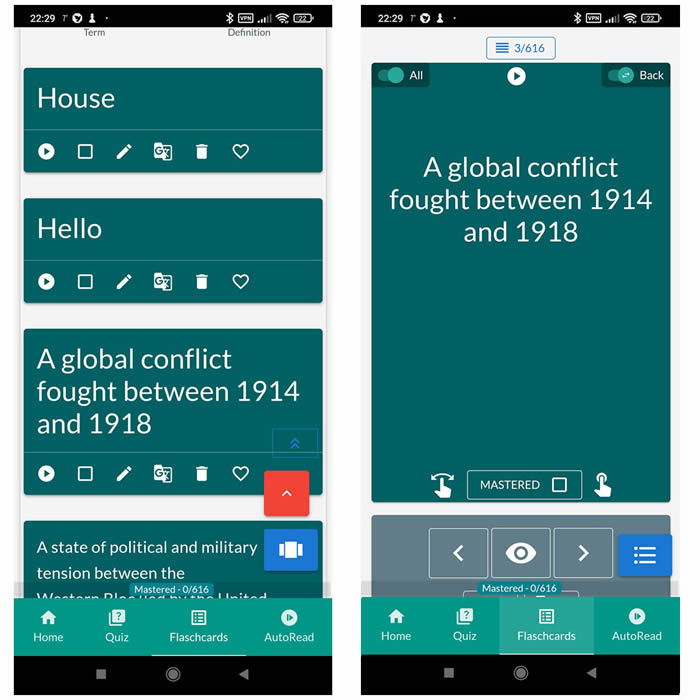
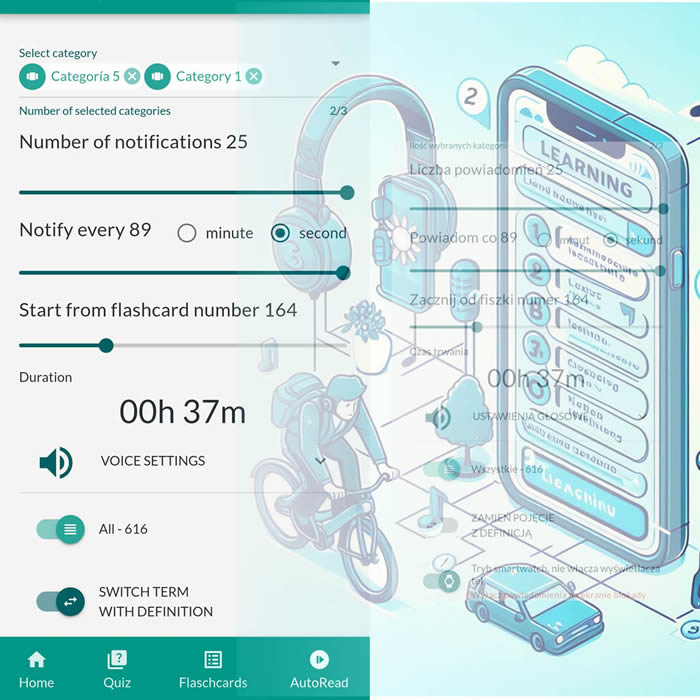
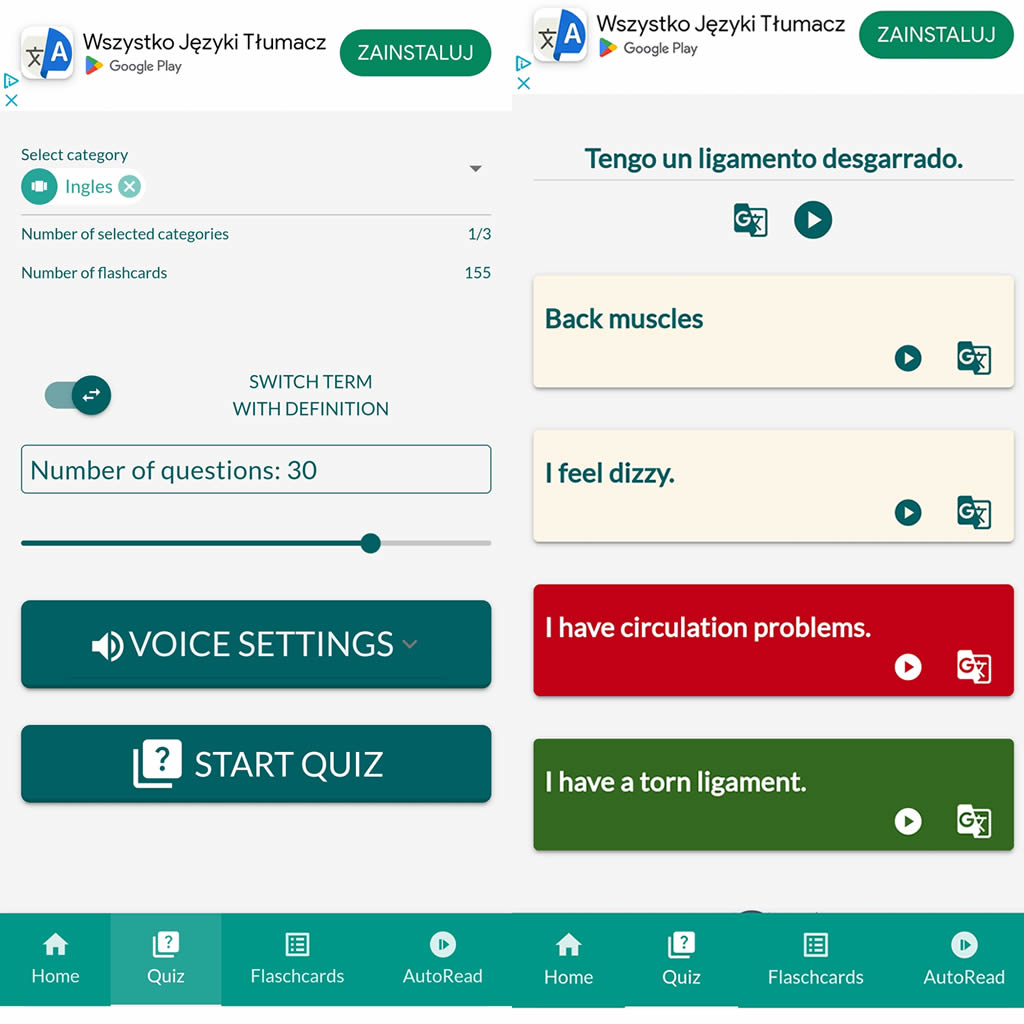
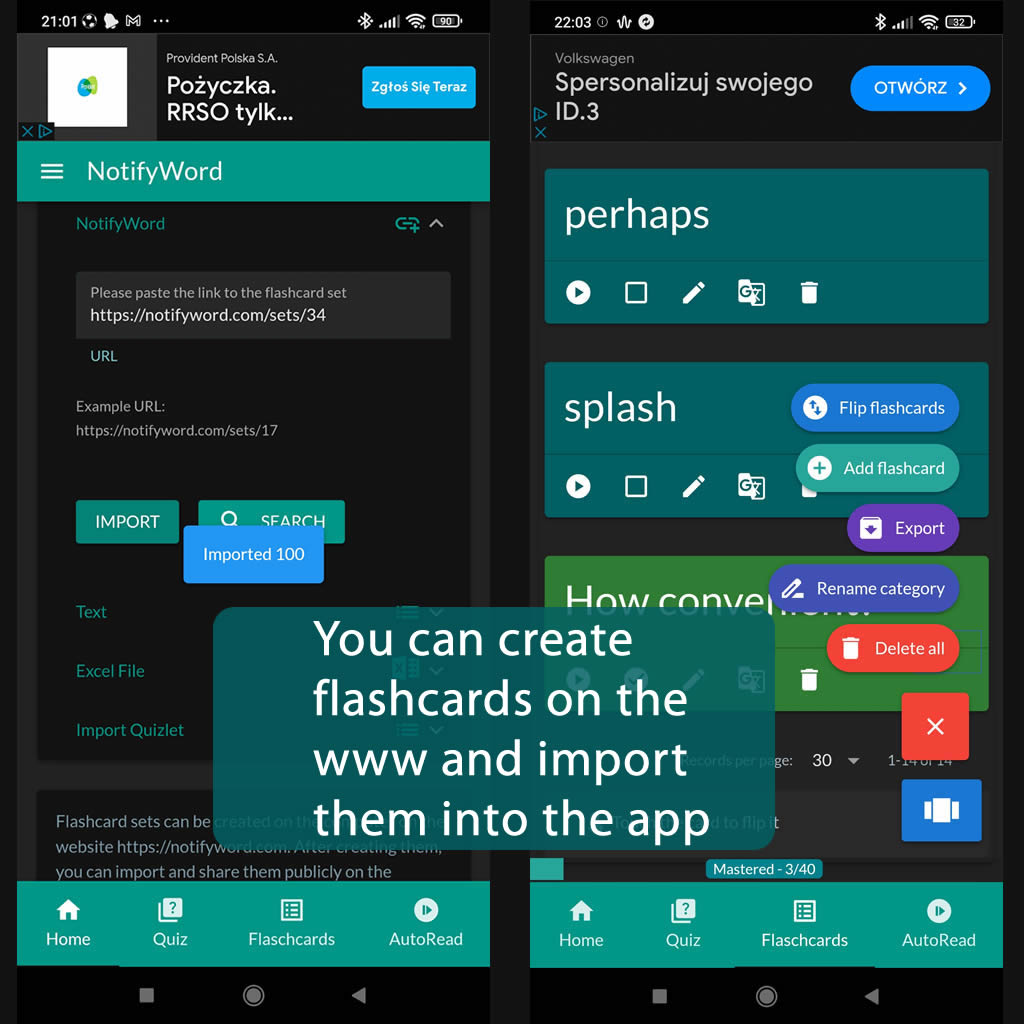
After importing flashcards into the Android NotifyWord app, you can listen to them without touching your phone, take quizzes, and mark the ones you've already learned - study actively or passively, whichever way you prefer.
📲
👉

🤖📚📖❓🎧🚴 Voice flashcards - an Android app for learning without touching the phone.
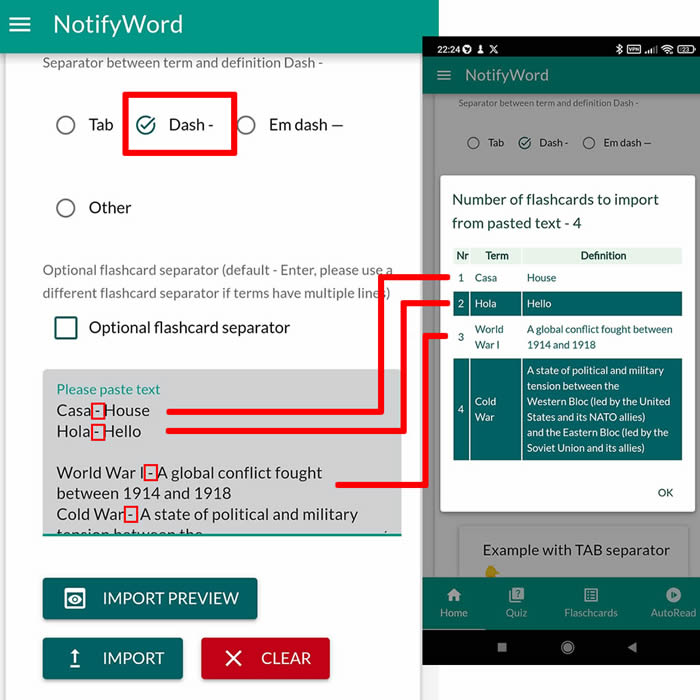
➕ On the website, you can create your own sets of flashcards, both public and private, import them from text, and then import them into the Android application.
| Term/Front | Definition/Back |
|---|---|
| 1 Trzy rzeczy widoczne pod mikroskopem TEM w komórce | Jądro, mitochondria (grzebienie), aparat Golgiego (cysterny C + pęcherzyki) |
| 2 Jak rozpoznać mitochondrium pod mikroskopem? | Wewnętrzne prążki = grzebienie mitochondrialne |
| 3 Białka peryferyjne vs integralne | Peryferyjne: zanurzone w jednej warstwie (receptory, enzymy); Integralne: przechodzą przez obie warstwy (kanały, przenośniki) |
| 4 Dyfuzja prosta vs wspomagana vs aktywny transport | Prosta: zgodnie z gradient., bez białek, bez ATP; Wspomagana: z białkami (kanały), bez ATP; Aktywny: wbrew gradient., białka + ATP |
| 5 Endocytoza vs egzocytoza | Endocytoza: wchłanianie w pęcherzyku błonowym; Egzocytoza: wydzielanie (udział aparatu Golgiego) |
| 6 Pinocytoza vs fagocytoza | Pinocytoza: wchłanianie cieczy; Fagocytoza: wchłanianie ciała stałego |
| 7 Skąd pochodzi rRNA i gdzie formują się rybosomy? | rRNA transkrybowane z DNA w jąderku → kompleksy z białkami opuszczają jądro → podjednostki formują się w cytozolu |
| 8 Trzy dowody na endosymbiozę mitochondriów/plastydów | 1) koliste DNA bez histonów 2) rybosomy 70S 3) dwie błony (bakteria + pęcherzyk fagocytarny) |
| 9 Apoptoza vs nekroza | Apoptoza: fizjologiczna (genetycznie zaprogramowana); Nekroza: patologiczna (uszkodzenie zewnętrzne) |
| 10 Różnica mejoza I vs mitoza w profazie | Mejoza I: crossing-over i tworzenie bivalentów (pary chromosomów homologicznych) |
| 11 Zmiany liczby C w cyklu komórkowym | G1: 2C; S: rośnie do 4C; G2: 4C; podział: wraca do 2C (liczba n nie zmienia się przy mitozie) |
| 12 Nić wiodąca vs opóźniona w replikacji | Wiodąca: synteza ciągła (3'→5' matryca); Opóźniona: synteza nieciągła, wiele primerów, fragmenty Okazaki |

ℹ️ After importing flashcards into the Android NotifyWord app, you can listen to them without touching your phone, take quizzes, and mark the ones you've already learned - study actively or passively, whichever way you prefer.☝️
📚✍️📲 You can copy someone else's flashcards to your own set - just copy the flashcards and paste them into the import tab, selecting the TAB separator.