Fiszki zaawansowane odpowiedzi do matury ustnej. Pomagają mówić płynnie, rozwijać wypowiedzi i zdobyć wyższy wynik.
Zaawansowane pytania, odpowiedzi do matury ustnej. Pomagają mówić płynnie, rozwijać wypowiedzi i zdobyć wyższy wynik.
tagmatura angielski
tagspeaking
tagmatura ustna angielski
added by -
NotifyWord_sample_flashcards
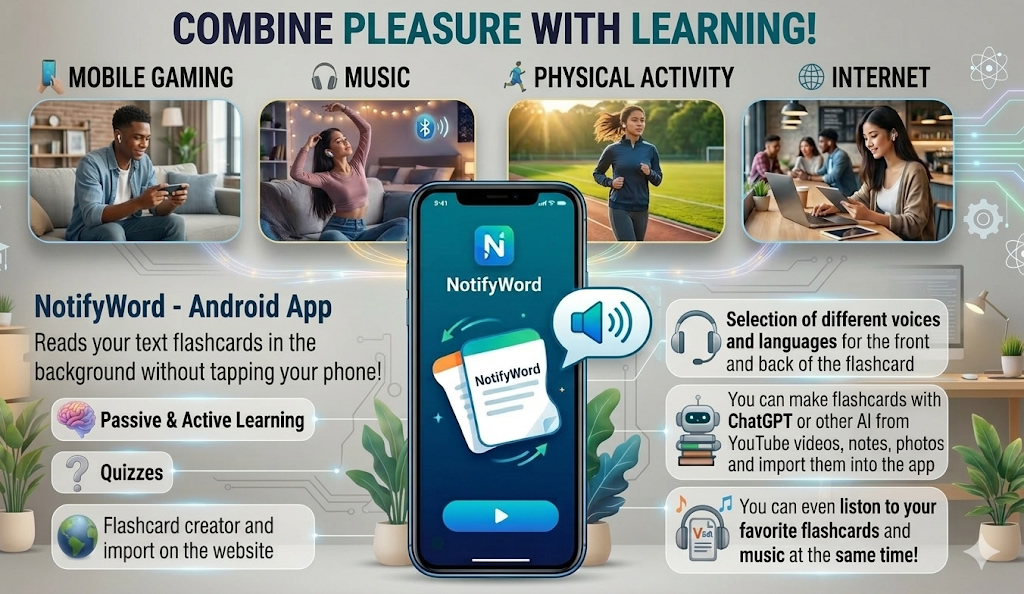
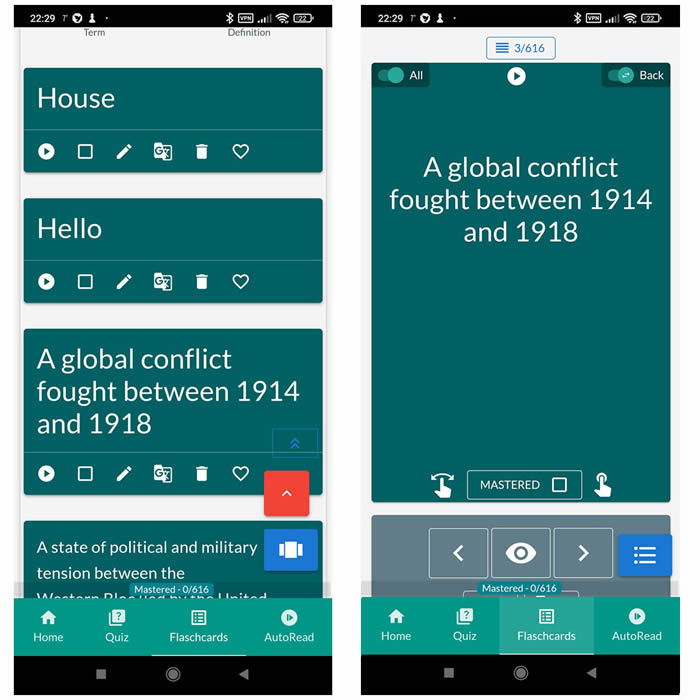
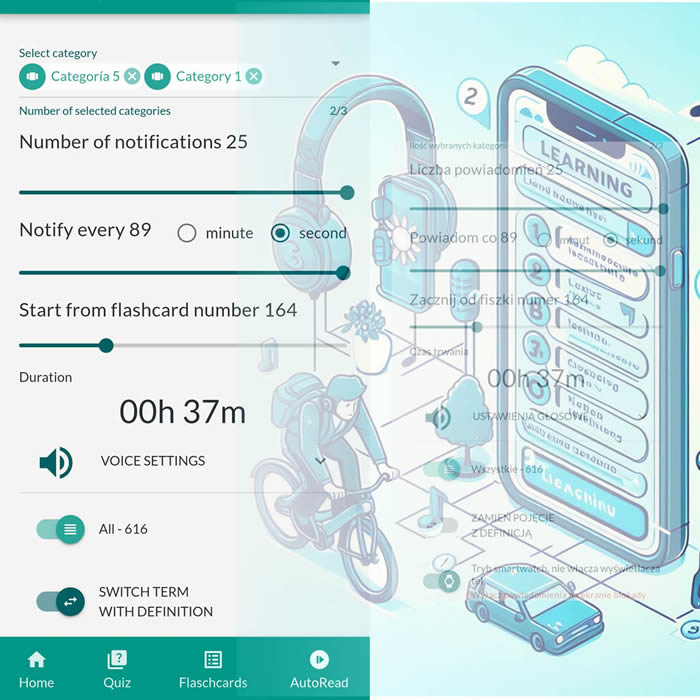
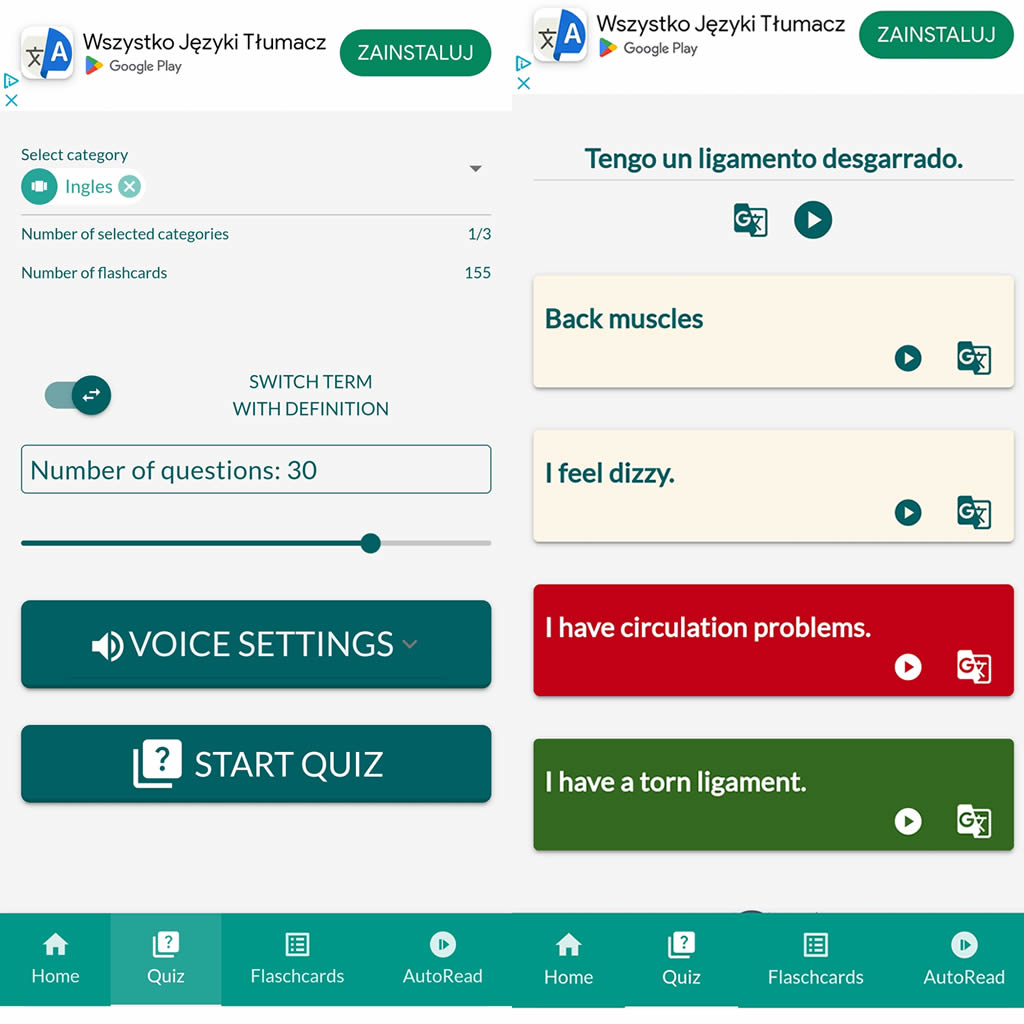
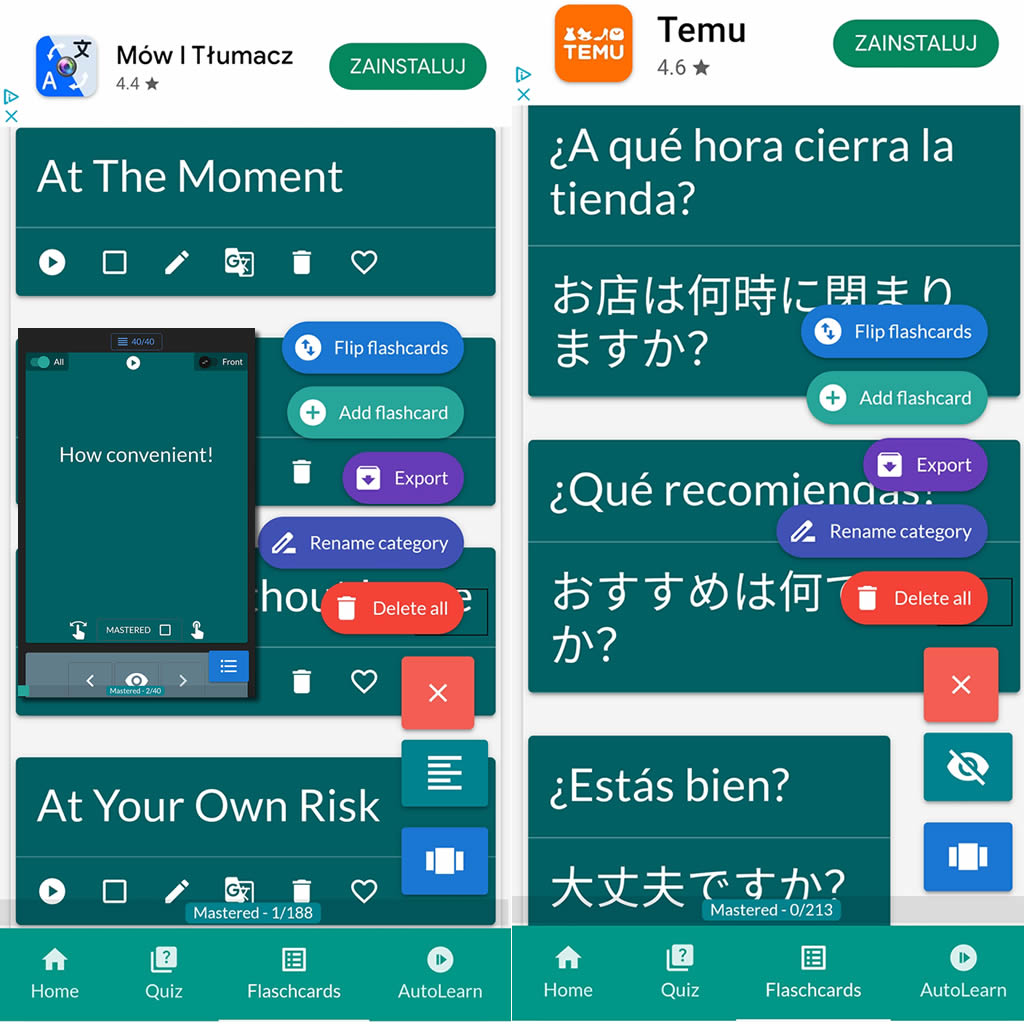
After importing flashcards into the Android NotifyWord app, you can listen to them without touching your phone, take quizzes, and mark the ones you've already learned - study actively or passively, whichever way you prefer.
📲
👉

🤖📚📖❓🎧🚴 Voice flashcards - an Android app for learning without touching the phone.
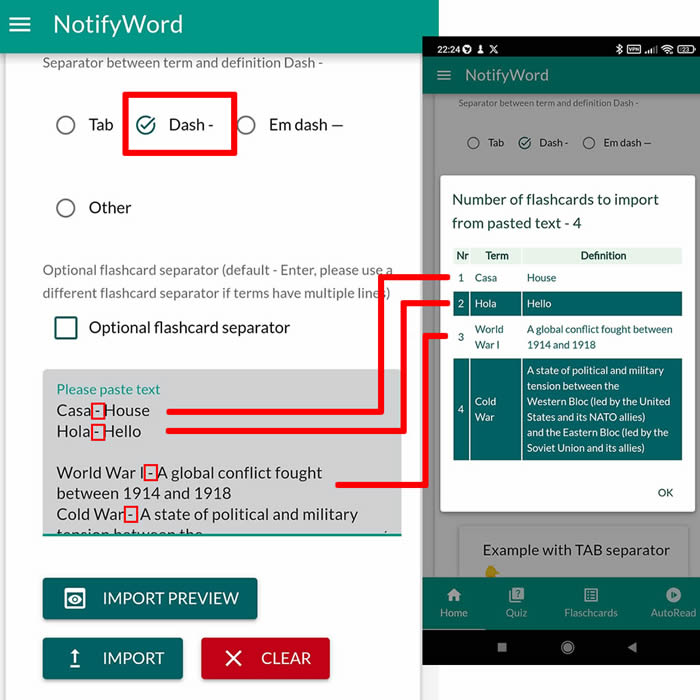
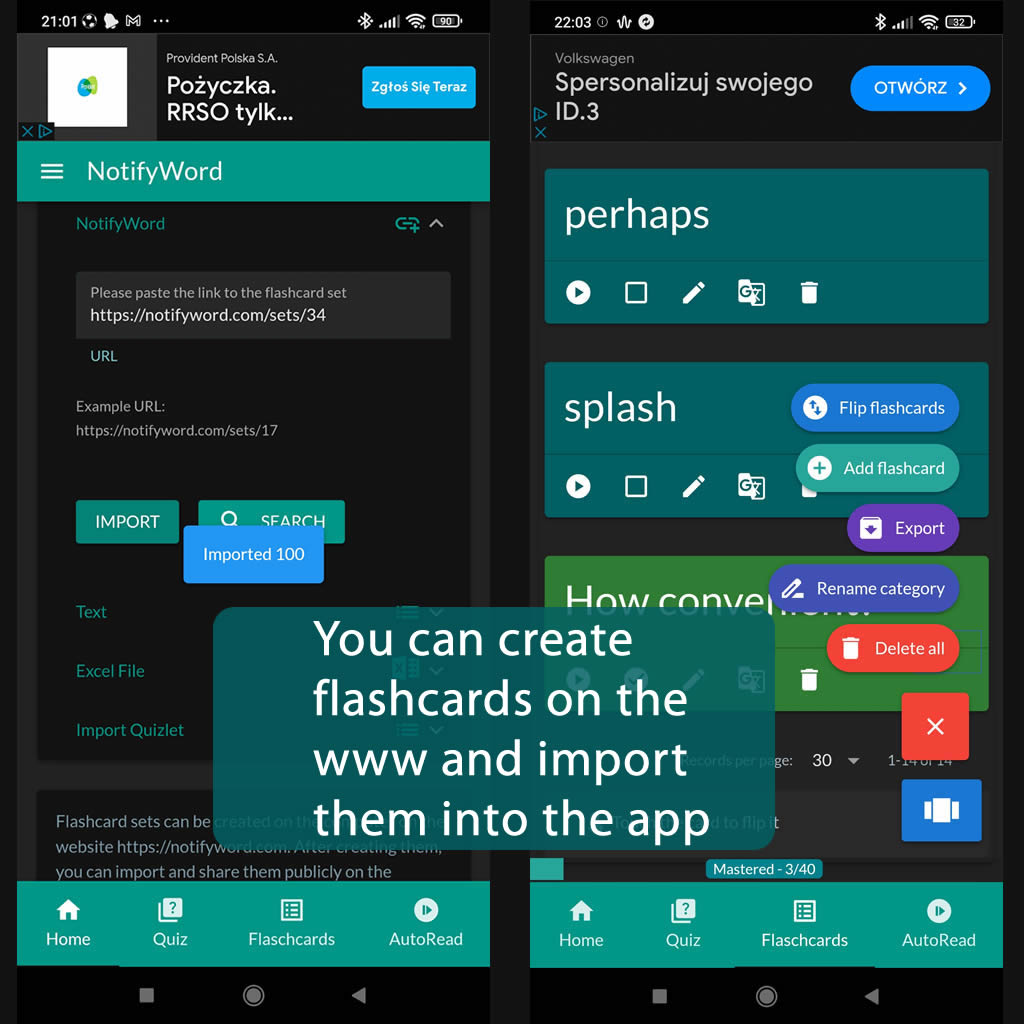
➕ On the website, you can create your own sets of flashcards, both public and private, import them from text, and then import them into the Android application.
| Term/Front | Definition/Back |
|---|---|
| 1 What do you usually do in your free time | In my free time, I usually relax by watching films, but I also try to do something productive like learning new skills |
| 2 Do you think hobbies are important | Yes, I believe hobbies are essential because they help us relax and develop new abilities |
| 3 How do you usually spend your weekends | I usually spend my weekends with friends or family, although sometimes I prefer to stay at home and rest |
| 4 Do you prefer active or passive relaxation | I prefer active relaxation, such as going for a walk, because it helps me clear my mind |
| 5 What kind of music do you enjoy | I enjoy different types of music, but most often I listen to pop because it helps me relax |
| 6 Do you think people spend too much time online | Yes, I think many people spend too much time online, which can negatively affect their health |
| 7 How often do you use social media | I use social media every day, but I try not to spend too much time on it |
| 8 What are the advantages of using the internet | One of the main advantages is access to information, which makes learning much easier |
| 9 What are the disadvantages of the internet | On the other hand, the internet can be addictive and sometimes unreliable |
| 10 Do you think technology makes life easier |
Yes, without a doubt, technology makes everyday tasks faster and more convenient |
| 11 Do you like travelling and why | Yes, I enjoy travelling because it allows me to explore new cultures and meet interesting people |
| 12 What is the best place you have visited | The best place I have visited was the mountains, because the views were breathtaking |
| 13 Do you prefer travelling alone or with others | I prefer travelling with others because it is more enjoyable and safer |
| 14 What are the advantages of travelling abroad | Travelling abroad helps improve language skills and broadens our perspective |
| 15 What problems can tourists face | Tourists may face problems such as language barriers or cultural differences |
| 16 Do you think tourism is always positive | Not necessarily, because it can sometimes harm the environment |
| 17 How do you usually prepare for a trip | I usually plan everything in advance, including accommodation and transport |
| 18 What is your dream destination | I would love to visit Japan because its culture is fascinating |
| 19 Do you prefer hotels or apartments | I prefer apartments because they are usually more comfortable |
| 20 Is travelling expensive |
It can be expensive, but there are ways to travel on a budget |
| 21 Do you think school prepares students for life | In my opinion, school provides basic knowledge, but it does not always prepare students for real life |
| 22 What would you change in the education system | I would make lessons more practical and engaging |
| 23 Do you prefer learning alone or in groups | Although both methods have advantages, I prefer learning alone because I can focus better |
| 24 What is the biggest problem students face | One of the biggest problems is stress caused by exams |
| 25 How do you deal with stress | I try to stay calm and organise my time effectively |
| 26 Do you think exams are necessary | Exams are important, but they should not be the only way to assess students |
| 27 Do you enjoy learning languages | Yes, I enjoy it because it opens many opportunities |
| 28 Is education important for success | Education is important, but attitude and hard work also matter |
| 29 What motivates you to study |
I am motivated by my future goals and ambitions |
| 30 Do you think a healthy lifestyle is important | Yes, leading a healthy lifestyle is crucial for both physical and mental health |
| 31 What do you do to stay healthy | I try to eat well and stay physically active |
| 32 Do people eat too much fast food nowadays | Yes, many people rely on fast food because it is convenient |
| 33 What are the benefits of exercise | Exercise improves health and reduces stress |
| 34 Do you think young people are active enough | Not always, many prefer spending time online |
| 35 How can people improve their lifestyle | They can start by making small changes, such as eating better and exercising regularly |
| 36 Do you cook at home | Yes, I cook from time to time, especially when I want to eat something healthy |
| 37 Is it important to drink water | Yes, staying hydrated is very important |
| 38 What is your favourite meal | My favourite meal is something simple but tasty, like pasta |
| 39 Do you think diet affects mood |
Yes, what we eat has a big impact on how we feel |
| 40 What are your plans for the future | I am planning to continue my education and find a good job |
| 41 Would you like to work abroad | Yes, I think working abroad would be a valuable experience |
| 42 What is more important, money or job satisfaction | I believe job satisfaction is more important in the long run |
| 43 What skills are useful at work | Communication, teamwork and responsibility are very important |
| 44 Do you prefer working alone or in a team | I prefer working in a team because we can share ideas |
| 45 What makes a good employee | A good employee is reliable, hardworking and motivated |
| 46 Do you think it is easy to find a job | It depends on the situation, but it can be challenging |
| 47 Would you like to start your own business | Yes, although it involves a lot of risk |
| 48 What motivates people to work hard |
People are usually motivated by money, success and personal goals |
| 49 Describe your best memory | One of my best memories is a trip with my friends, because we had a great time together |
| 50 Describe a difficult situation | I once faced a difficult situation at school, but I managed to solve it by staying calm |
| 51 Describe your favourite place | My favourite place is somewhere quiet where I can relax |
| 52 Describe a person you admire | I admire people who are hardworking and never give up |
| 53 Describe your hometown | My hometown is quite small, but it is peaceful and friendly |
| 54 Describe a typical day | A typical day for me starts with school and ends with relaxation |
| 55 Describe a good teacher | A good teacher is patient and explains things clearly |
| 56 Describe your favourite activity | My favourite activity is spending time with friends |
| 57 Describe a problem you solved | I solved it by thinking carefully and asking for help |
| 58 Describe a success you achieved | One of my biggest successes was passing an important exam |

ℹ️ After importing flashcards into the Android NotifyWord app, you can listen to them without touching your phone, take quizzes, and mark the ones you've already learned - study actively or passively, whichever way you prefer.☝️
📚✍️📲 You can copy someone else's flashcards to your own set - just copy the flashcards and paste them into the import tab, selecting the TAB separator.
📚✍️📲 You can copy someone else's flashcards to your own set - just copy the flashcards and paste them into the import tab, selecting the TAB separator.